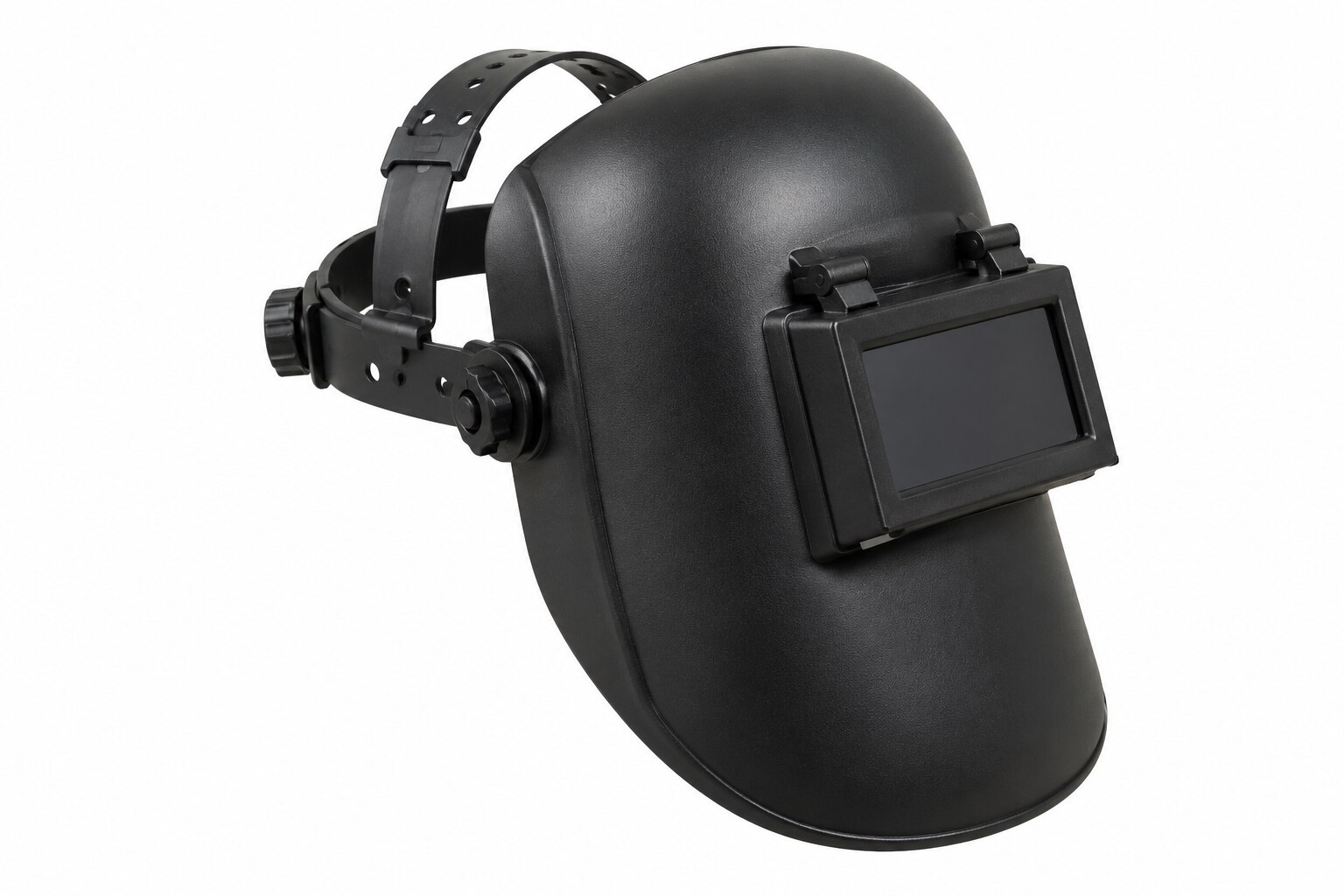
A ring that matches a helmet shell can still fail to hold the filter, preserve a face seal, or maintain the tested impact rating. Before you place an order, identify the ring assembly, prove compatibility with the complete helmet, and match the mechanism to your workshop’s welding, grinding, PPE, and maintenance demands.
Key takeaways
- Confirm whether the ring retains headgear, lenses, seals, or a respirator interface.
- Match the ring to the helmet model, lens size, headgear, and mounting points.
- Demand fitment evidence, stock confirmation, and written return terms before ordering.
- Reject damaged parts or helmets without traceable safety documentation.
Identify the Ring Type and Its Actual Job
“Ring type” describes fitment, not a safety classification. A welding helmet ring may be a headgear-retaining ring, lens-retaining ring, face-seal ring, or respirator-and-helmet interface; each performs a different job.
Identify the arrangement before ordering:
1. Inspect shell mounting holes, side pivots, pivot bolts, washers, locking hardware, adjustment points, and the connection to the headband. A helmet retaining ring usually secures headgear or the shell; a lens-retaining ring holds the filter or cover lens.
A face-seal ring contacts the wearer’s face, while a respirator interface joins the helmet to respiratory equipment.
2. Ask whether the ring is supplied as part of a complete assembly or as a separate replacement. A ring that fits the shell can still fail to retain the filter, preserve a face seal, or maintain the helmet’s tested impact rating if its thickness, holes, fasteners, or mating parts differ.
3. Require the helmet manufacturer, exact model, replacement-part number, and a drawing or photograph showing the mounting arrangement. Reject any part that requires forcing, drilling, gluing, or improvised hardware.
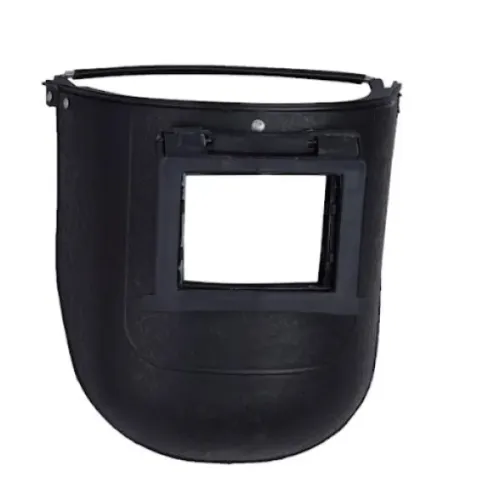
A practical ring-type welding helmet dealer supplies replacement rings, complete helmets, headbands, ratchet or spring-loaded mechanisms, and compatible spares—not merely a generic ring. Ask for separately replaceable cover lenses, filter cartridges, sweatbands, batteries, and side-seal components with their part numbers. Confirm the ring remains secure through repeated lift-and-lower cycles.
Prove Compatibility Before Ordering a Ring or Headgear Assembly
Record the helmet brand and exact model before ordering. Measure helmet mounting-hole spacing, ring diameter or other mounting dimensions, pivot-bolt size, and note every washer, spacer, and nut in the helmet pivot hardware.
- Identify the welding helmet headband: ratchet, spring-loaded, or fixed.
- Record its crown-size range and adjustment method.
- Confirm whether the quoted ring is a headgear-retaining ring, lens-retaining ring, face-seal ring, or respirator interface.
- Ask for the replacement-part number and a drawing or photograph of the mounting arrangement.
| Supply format | What you receive | Ordering risk |
|---|---|---|
| Complete assembly | Ring, pivots, fasteners, and headgear matched together | Lower risk of missing washers or mismatched parts |
| Separate parts | Ring, headgear, pivots, or fasteners sold individually | You must verify every interface and part number |
| Generic ring | A component described without model-specific fitment | Physical fit may not retain the filter or preserve the tested impact rating |
Before approval, fit the assembly on the actual helmet. Tighten it until the shell stays raised, lower it without sideways movement, and confirm the viewing window remains aligned with your eyes. Run repeated lift-and-lower cycles; reject it if pivot tension changes, the shell drops, the headband unlocks, or the helmet becomes front-heavy.
Test compatibility while wearing safety spectacles, earmuffs, a hard hat, respirator, powered-air-purifying system, and communication equipment used on the job. A tight-fitting respirator must retain its seal and pass its required fit-test after the helmet interface is installed.
Compare Ring, Ratchet, Spring-Loaded, Flip-Front, and Fixed Designs
A ring mechanism suits an assigned helmet and a steady welding cycle better than a shared helmet that changes hands every hour. Compare the complete headgear and shell movement, not the ring alone.
| Option | Adjustment speed | Comfort and stability | Lift position, balance and replacement effort |
|---|---|---|---|
| Ring system | Moderate; ring tension and pivot hardware need setting | Stable when correctly tightened, but loose washers create side play | Predictable lift; keep spare rings, washers and fasteners |
| Ratchet headgear | Fast crown adjustment without removing the helmet | Efficient for different head sizes; poor tension causes slipping | Quick lift, with fewer small parts to replace |
| Spring-loaded welding helmet mechanism | Very fast lift and return | Convenient during short welds; spring fatigue can change the holding force | Consistent lift until the spring weakens; replace the mechanism |
| Flip-front welding helmet | Fast access to the face and lens area | Adds front weight and can disturb balance | Raises the front section, not always the whole shell; replace hinges, latches or springs |
| Fixed shield | No adjustment | Stable only when hand-held or correctly mounted; tiring for prolonged work | No lift position; replace the complete shield when damaged |
For frequent operator changes, the ring versus ratchet welding helmet choice usually favours ratchet adjustment. Repeated grinding calls for a separately marked, impact-rated grinding visor or clear protection; a grinding setting is not a welding filter shade.
- Check duty cycle, number of welders, assigned or shared use, and how often the helmet is raised.
- Keep compatible headgear and retaining parts, with spare rings, washers and fasteners.
- Add spectacles, goggles or a face shield when flying particles or face exposure require them.
- Treat the helmet as face and eye protection, not respiratory protection; control fumes through ventilation and a respiratory-protection programme.
Test the Dealer’s Fitment Evidence, Stock, and Return Terms
Do not approve a ring from a catalogue photograph alone. Use this welding helmet dealer checklist and require evidence that the complete helmet assembly, not just its lens or ring, matches the stated safety standard.
1. Request the manufacturer, exact model, replacement-part number, ring purpose, component dimensions, mounting-hole spacing, pivot hardware, and material details. Confirm whether the ring is sold alone or with headgear, washers, fasteners, and retaining parts.
2. Ask for current stock status and the complete assembly contents. Confirm that headgear, retaining rings, front and inner cover lenses, filter cartridges, sweatbands, batteries, and seal components are separately available as compatible welding helmet replacement parts.
3. For United States procurement, require the assembly’s ANSI Z87.1 welding helmet marking, or the named equivalent consensus standard. Ask the dealer to explain the selected filter shade for your welding process and amperage; “one shade fits all” is not evidence.
4. For European PPE, request the Regulation (EU) 2016/425 conformity route, CE marking, declaration of conformity, and notified-body details where the assessment requires them. Match the manufacturer, model, lot or serial marking, and shade range to the paperwork.
5. Obtain an invoice and written return terms covering an incorrectly matched ring. Reject terms that exclude returns before you can check fitment, or that leave compatibility entirely to you.
A Delhi buyer can apply the same test to Goyals Industrial Hub: verify local stock, documented compatibility, and replacement support rather than choosing a dealer solely from search visibility.
Reject Rings and Helmets That Fail Inspection or Documentation Checks
Remove a ring, helmet, or auto-darkening assembly from service when it fails any welding helmet rejection criteria, not only when it breaks completely. Use this welding helmet inspection checklist before approval and during maintenance:
- Excessive side play, an unexpected helmet drop, or a stiff pivot
- Stripped adjustment threads, cracked shell mounting points, or missing washers
- A headband that will not lock, or a distorted or loose retaining ring
- Damaged filter or cover plates, degraded seals, or illegible markings
Do not restore these parts with tape, adhesive, drilled holes, or improvised hardware. Replace them with parts documented for the exact helmet model.
Require a dealer or employer to demonstrate an auto-darkening welding helmet test. Check the shade range, optical-performance marking, test-button operation, battery type and replaceability, expected service interval, solar-cell dependence, and behaviour during low battery or power failure. Confirm what happens to UV/IR protection when the electronics fail.
EN 379 classifies automatic welding filters by four optical properties:
- Optical quality
- Scattered light
- Homogeneity
- Angular dependence
The result may appear as EN 379 1/1/1/1. “HD” and “true color” prove nothing without that classification and supporting documentation.
Match the physical helmet’s manufacturer, model, lot or serial number, shade range, and standard markings to the paperwork. Reject a catalogue claim that cannot be traced to the shell and filter assembly.
Frequently asked questions
What does a ring do on a welding helmet?
A ring can retain the headgear, hold the lens, create a face seal, or connect a respirator and helmet interface. Confirm its actual job before ordering.
How do you prove a replacement ring fits a welding helmet?
Match the helmet model, ring dimensions, lens or headgear assembly, mounting points, and manufacturer fitment information. Ask the dealer for photographs or a parts diagram when details are unclear.
What should you compare between ring and ratchet designs?
Compare adjustment control, retention, replacement effort, comfort, flip-front access, and whether the design stays secure during repeated workshop use.
What should you ask a welding helmet ring dealer before buying?
Ask for current stock confirmation, fitment evidence, part identification, return conditions, inspection details, and available safety documentation.