A belt fastener quotation is incomplete if it names only a width, strip quantity, and price. You need to establish whether the proposed splice suits the belt construction, pulley layout, operating environment, installation method, and inspection procedure before comparing dealers. By the end, you will have a practical checklist for testing the product, documents, tooling, and field support behind a dealer’s offer.
Key takeaways
- Match the fastener to belt construction, thickness, tension, and operating conditions.
- Confirm whether a mechanical splice suits the belt, pulley, material, and environment.
- Request a trial splice, installation tooling, and clear ordering dimensions.
- Demand batch traceability, technical documents, and proof of installation support.
Start with the Belt, Not the Fastener Catalogue
A dealer should select the belt fastener system from the belt’s construction and operating load, not from belt width alone. Steel-cord belts and thick multi-ply belts need a specifically approved system; a fastener that fits the measured thickness can still cut, loosen, or inadequately grip the carcass.
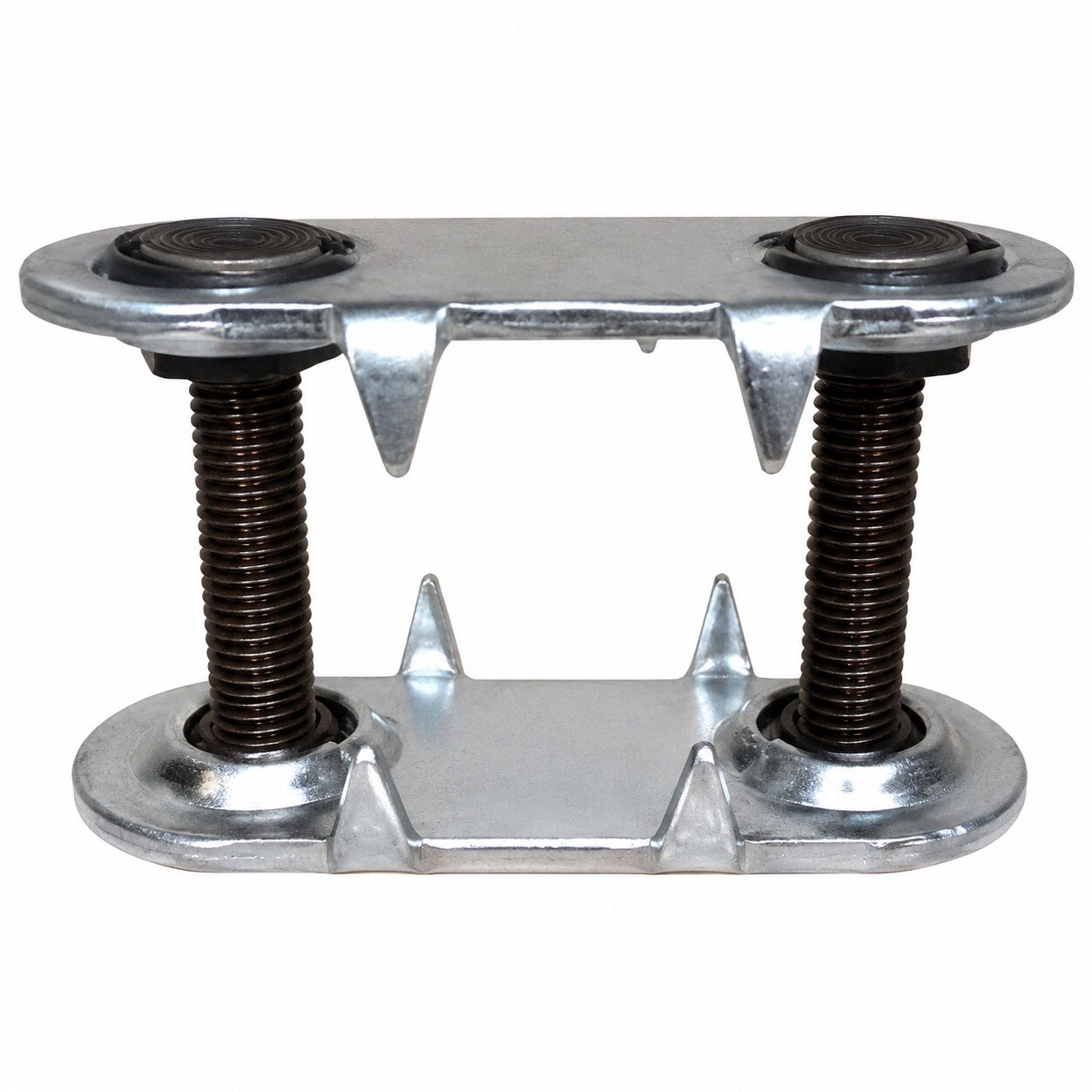
- Match the carcass and duty to the system: wire-hook fasteners suit flexible textile belts and lighter service; hinged plate fasteners suit applications needing a flexible splice; rivet-hinged fasteners transfer higher loads while allowing pulley flexing; solid-plate fasteners suit heavier-duty belts when their rigidity and pulley requirements are acceptable.
- Record belt thickness, width, tensile rating, textile or steel-cord carcass, cover thickness, cover hardness, and the required splice strength. Ask the dealer to state the assumed splice efficiency and design tension.
- Compare the manufacturer’s belt-tensile range with the application, but do not treat it as conveyor capacity. Belt tension and material load also depend on speed, incline, loading, take-up arrangement, pulley layout, and starting forces.
- Check the stated minimum pulley diameter at every drive, snub, bend, and take-up pulley. A splice that survives the drive pulley can fatigue on a smaller bend pulley.
In a classified dust or gas atmosphere, request the equipment classification, conformity documents, and restrictions affecting materials or belt cleaners; a mechanical splice alone proves no ATEX conformity. For food contact, verify the complete belt-and-splice assembly, including 21 CFR 177.2600 where applicable, rather than assuming an ordinary industrial fastener is compliant.
Decide Whether a Mechanical Splice Fits the Application
Choose a mechanical fastener when you need a rapid field repair, a removable joint, or a splice that can be installed without vulcanising equipment. Choose a vulcanised splice for a high-speed conveyor, heavy starting loads, or a belt that must pass smoothly over small pulleys without a raised joint.
| Option | Mechanical belt fastener | Vulcanised splice |
|---|---|---|
| Access and downtime | Installs quickly and can be reopened for belt changes | Takes more equipment, preparation, and curing time |
| Running surface | Leaves a joint that can catch scrapers or allow material ingress | Produces a continuous, smoother belt surface |
| Service conditions | Suitable only when the fastener tolerates the belt, load, moisture, and material | Better for high speed, high tension, abrasive and wet environments |
| Food contact | Requires approval for the complete belt-and-splice assembly; 21 CFR 177.2600 may apply in the United States | Still requires approval for every component, not only the belt cover |
| Maintenance | Useful for emergency repairs and short belts | Better for permanent, low-maintenance service |
Do not accept a fastener because its stated tensile range matches the conveyor load. Ask the dealer to state the assumed splice efficiency and design tension, then check:
- Belt thickness, carcass type, cover thickness, tensile rating, and textile or steel-cord construction
- Minimum diameter at drive, snub, bend, and take-up pulleys
- Compatibility with abrasive or wet material, belt cleaners, and corrosion exposure
- Static and ignition-control documentation for classified dust or gas areas; a mechanical splice alone proves no ATEX conformity
- Whether hook-style, plate-style, or hinged fasteners are approved for that carcass and cover hardness
Check Ordering Details, Tooling, and a Trial Splice
A low unit price is meaningless if the order omits the dimensions and tools needed for a square, serviceable splice. Put the complete installation basis in writing before comparing quotes.
1. State the nominal belt width, actual belt thickness, belt construction, and required splice strength. Give the dealer the smallest pulley diameter in the route, including snub, bend, and take-up pulleys; the proposed fastener must flex around that pulley.
2. Specify fastener strips by length and quantity, plus the required rows and overlap across the belt. Record the edge clearance from each belt edge and require the dealer to confirm the fastener pattern against the belt width rather than estimating from a catalogue photograph.
3. List every installation item: approved cutter or skiver, punching or drilling tool, setting tool, rivet driver, hinge pin, templates, and torque settings. Ask for the manufacturer’s installation manual, belt-preparation dimensions, and a trained technician if your crew has not installed that system.
4. Require a trial splice on the actual belt before approving a production order. Check fastener spacing, edge distance, splice squareness, belt tracking, transverse flexibility, exposed ends, and tool or belt-cutter damage.
5. Run the trial through belt cleaners, scrapers, skirts, transfer points, and chute seals. Inspect for snagging, sharp projections, poor clinching, and interference; then obtain the written reject criteria and recommended inspection interval.
A dealer that cannot document this trial, the minimum pulley diameter, and a replacement procedure is quoting hardware, not a verified splice.
Inspect the Sample and Demand Traceable Documentation
A dealer’s sample should match the proposed specification, not merely resemble it. Measure the fastener dimensions and hinge-pin diameter against the manufacturer’s drawing, then inspect rivet quality for uniform heads, secure clinching, and no cracks or burrs.
Confirm the fastener material and finish suit the belt environment; corrosion, abrasion, moisture, and chemical exposure can turn a visually acceptable sample into a short-lived splice.
Reject loose, mixed, or unmarked stock. Original packaging should show the manufacturer, product designation, size, material or finish, and lot or batch number. Ask for the same identifiers on the quotation and delivery documents so a failed splice can be traced instead of blamed on an unknown component.
Request these documents before approval:
- Manufacturer’s technical data sheet stating the belt-thickness range, splice strength, minimum pulley diameter, and approved belt constructions
- Installation manual showing belt-preparation dimensions, fastener spacing, tooling, and acceptance checks
- Certificate or declaration identifying the supplied product and lot
- Storage limits and expiry date for any adhesive, rubber component, or other time-sensitive item
- Written design basis stating assumed splice efficiency and design tension
Check the minimum pulley diameter at drive, snub, bend, and take-up pulleys. For a classified dust or gas atmosphere, also demand equipment classification, conformity documents, and restrictions on materials or belt cleaners; a mechanical splice alone does not prove ATEX conformity.
Test the Dealer’s Installation and After-Sales Capability
A capable dealer proves its process on your belt, not just through a catalogue. Ask for a supervised trial splice using the actual belt, then observe preparation, fastening, inspection, and documentation.
Require the dealer to provide:
- The manufacturer’s installation manual, belt-preparation dimensions, and approved tooling for the specified fastener system.
- A trained technician who records belt condition, splice dimensions, fastener spacing, edge distance, and lot traceability.
- A written safety procedure requiring isolation, lockout/tagout and zero hazardous energy before measuring, cutting, or fastening. Guarding does not protect anyone from unexpected belt movement or stored energy.
- An acceptance record covering consistent penetration or clinching, splice squareness, secure edge treatment, no sharp projections, and no cutter or tool damage.
- Trial checks for tracking, transverse flexibility, exposed ends, and clearance through scrapers, belt cleaners, skirts, transfer points, and chute seals.
- The manufacturer’s inspection interval, reject criteria, documented replacement procedure, and emergency splice support.
Ask Goyals Industrial Hub to put those deliverables in the quotation rather than accepting “installation included” as proof of competence. A dealer that cannot identify the correct system for the belt carcass, pulley diameter, and loading should not install it; steel-cord and thick multi-ply belts need specifically approved solutions.
For classified dust or gas areas, demand equipment classification, conformity documents, and restrictions on materials or cleaners. A splice that looks complete can still fail in service or catch downstream equipment.
Frequently asked questions
Why should belt construction matter more than belt width when choosing fasteners?
Belt width does not show carcass design or load requirements. Steel-cord and thick multi-ply belts need a fastener system specifically approved for their construction and operating load.
When is a mechanical belt splice a suitable choice?
Assess the belt construction, operating load, pulley arrangement, conveyed material, temperature, contamination, and access for installation before choosing a mechanical splice.
What should you confirm before ordering belt fasteners?
Confirm belt construction and thickness, fastener size, splice dimensions, tooling, required quantity, compatible components, and whether the dealer can provide a trial splice.
Which documents should a belt fastener dealer provide?
Ask for product specifications, installation instructions, compatibility information, batch or lot identification, and traceable quality documents for the supplied fasteners.
How can you assess a dealer’s installation and after-sales capability?
Ask who will support installation, what training or tooling guidance is available, how defects are handled, and whether the dealer can inspect or troubleshoot the installed splice.