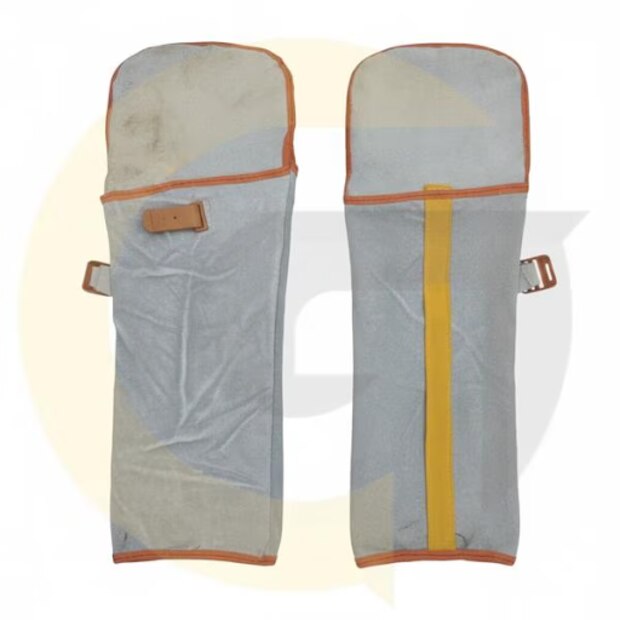
A leather sleeve only works when its length, closure, overlap, and documented performance match the task. You will be able to assess those details, fit the sleeve with the rest of your PPE, and identify when another protective system is required.
Key takeaways
- Match sleeve coverage to sparks, spatter, heat, edges, and your working posture.
- Measure arm length and create continuous overlap with gloves and clothing.
- Check stitching, closures, markings, and stated protection limits before purchase.
- Replace damaged sleeves and continue using eye, face, body, and respiratory PPE.
Match the sleeve to the hazard, posture, and task
Choose the sleeve by hazard, posture, and task—not by leather thickness alone. Start with a documented welding hazard assessment that separates sparks and spatter, radiant heat, brief contact heat, sharp edges, grinding debris, electric shock, arc-flash energy, and fumes.
| Design | Best fit | Selection reason |
|---|---|---|
| Extended sleeve with secure upper-arm closure | Overhead welding | Covers more of the forearm when spatter falls toward the wrist; avoid openings that let hot particles enter. |
| Long sleeve with a close-fitting gauntlet | Horizontal welding | Protects the wrist and lower forearm from side-directed spatter while the arm stays extended. |
| Shorter bench fabrication sleeves | Bench fabrication | Gives elbow and wrist mobility for repeated fitting, tacking, and handling; choose more coverage when the work produces heavy spatter. |
| Reinforced sleeve with abrasion resistance | Grinding and cutting | Helps against sparks, burrs, and sharp edges, but it does not replace face, eye, or hand protection. |
For overhead welding, choose a sleeve that remains in position with the arm raised. For horizontal welding, reject a loose cuff that can catch on fixtures or expose the wrist when you reach forward.
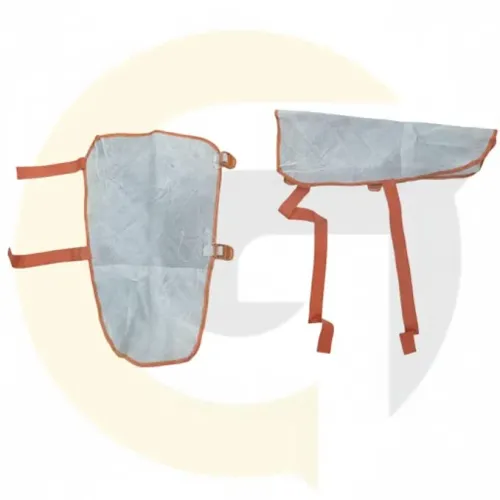
Thumb holes, straps, snaps, elastic, and hook-and-loop closures each need a movement check: the sleeve must not twist, snag, or leave a gap between glove gauntlet and jacket cuff.
Leather blocks common sparks and short heat exposure, but it is not electrical insulation and does not control fumes. Use voltage-rated rubber insulating equipment for shock hazards, ventilation or local exhaust for fumes, and remove leather contaminated with oil or grease from hot work.
Measure your arm and build a continuous protective overlap
Measure with the jacket and glove you will actually wear, not against bare skin. Record arm circumference at the largest point of the upper arm and sleeve length from the shoulder point to the wrist crease, with your elbow slightly bent.
Use those figures against the maker’s leather sleeve sizing chart; do not choose by height or glove size.
- Put on the jacket and sleeve, then bend, raise, and extend your arm as you would while welding. The sleeve must cover the forearm in every position without pulling tight across the elbow.
- Fit the lower opening beneath the jacket cuff and over the welding glove gauntlet. The glove gauntlet must overlap the sleeve, leaving no visible wrist when you grip the torch.
- Check the upper edge at the shoulder and upper arm. A loose opening lets sparks enter; a short sleeve exposes skin when you reach overhead.
- Walk through the task with the sleeve secured. A thumb hole, strap, snap, elastic edge, or hook-and-loop closure must hold the sleeve in place without restricting wrist rotation.
Choose extra sleeve length and a secure closure for overhead welding, where spatter falls toward the wrist. A closer fit suits bench work and horizontal welding, while grinding and cutting require coverage that stays closed when you move against sharp edges.
Do not accept a gap between sleeve, glove, and jacket cuff. Leather blocks sparks and brief heat; it does not provide electrical insulation or replace voltage-rated rubber insulating equipment.
Check construction, markings, and protection limits before purchase
Ask for the sleeve’s model number, leather thickness in millimetres, size range, and test documentation before comparing prices. A statement such as “heat resistant leather” proves little without the tested hazards, test method, and protection limits.
| Evidence | What it proves | Reject or investigate when |
|---|---|---|
| ISO 11611 marking: Class 1 or Class 2 | The garment was assessed for limited flame spread, convective and radiant heat, and molten-metal splash. Class 2 suits more hazardous welding conditions, including higher spatter and radiant-heat exposure. | The seller uses “welding grade” but gives no class or declaration of conformity. |
| Test report or certificate naming the exact model | The tested sleeve matches the sleeve you will receive. | The document names only a material, glove, jacket, or different model. |
| Leather thickness, seam construction, and cuff design | You can judge durability, heat and abrasion resistance, and whether sparks can enter at the glove, wrist, or jacket overlap. | Thickness is unspecified, seams are exposed or weakly finished, or the cuff is too short, loose, or unsupported for the working posture. |
| Traceability marking and care label | The batch or production reference connects the product to its documentation and cleaning limits. | The sleeve has no permanent label, model reference, or care instructions. |
Do not treat an ISO 11611 classification as electrical protection. Leather is not electrical insulation. For arc-flash work, require a documented ATPV or cal/cm² rating; for shock protection, use voltage-rated rubber insulating equipment with its required leather protectors. Also reject claims covering chemical exposure or molten-metal immersion unless separate test data names those hazards.
Keep the sleeve serviceable and use the PPE it cannot replace
Inspect the sleeve before every shift and after any event that could damage it. A proper PPE inspection checks for burned or hardened leather, split seams, exposed stitching, holes, loose closures, and contamination that cannot be removed. A damaged sleeve can let spatter reach your skin; replace it rather than patching a burned area.
- Brush off dry dust and metal particles after use.
- Follow the manufacturer’s cleaning instructions; do not soak, bleach, or apply solvents unless the care label permits it.
- Treat oil, paint, chemicals, or other contaminated leather as a hazard, not as ordinary dirt. Remove the sleeve from service if cleaning leaves residue, a changed texture, or an unknown chemical exposure.
- Store it dry and flat, away from welding heat, sunlight, sharp edges, and electrical equipment.
Leather hand sleeves provide a barrier against the thermal and mechanical hazards stated by their markings. They do not provide electrical insulation, so use voltage-rated rubber insulating equipment and the required leather protectors for shock hazards.
They also do not replace arc-flash clothing; select arc-rated clothing with a documented ATPV or cal/cm² rating under your electrical-safety program.
Use welding fumes ventilation or local exhaust at the source. If engineering controls do not adequately control exposure, add the respiratory protection specified by your hazard assessment; leather does nothing to lower airborne contaminant concentration.
What a responsible dealer should provide with the sleeve
A responsible dealer should turn your hazard assessment into a written selection record, not simply point to “welding grade.” Ask for:
- The manufacturer’s standard designation and the hazard-performance ratings, including the test method and protection limits.
- Sleeve length, cuff dimensions, closure details, size range, and the arm measurements used for fitting.
- Manufacturer test reports that distinguish resistance to sparks, spatter, radiant heat, contact heat, and abrasion.
- A compatibility note covering the welding glove, jacket cuff, apron, and other compatible welding PPE.
- Cleaning restrictions, drying instructions, contamination warnings, and replacement criteria.
- A clear statement of hazards the sleeve does not control, such as electric shock, arc-flash energy, molten-metal immersion, or fumes.
That information lets you match the sleeve to the actual task assessment. An employer assessing overhead welding needs evidence for falling spatter and upper-arm coverage; a grinding assessment needs abrasion and flying-debris controls. Do not treat either task as interchangeable with bench welding.
Ask Goyals Industrial Hub to record the selected size, companion PPE, test evidence, and limitations on the quotation or product file. A traceable handoff makes supervisor checks and replacement decisions easier.
The dealer must also flag a critical boundary: leather is not electrical insulation. Use voltage-rated rubber insulating equipment and its leather protectors where shock protection is present, and remove leather contaminated with oil or grease rather than assuming heat resistance makes it safe.
Related product
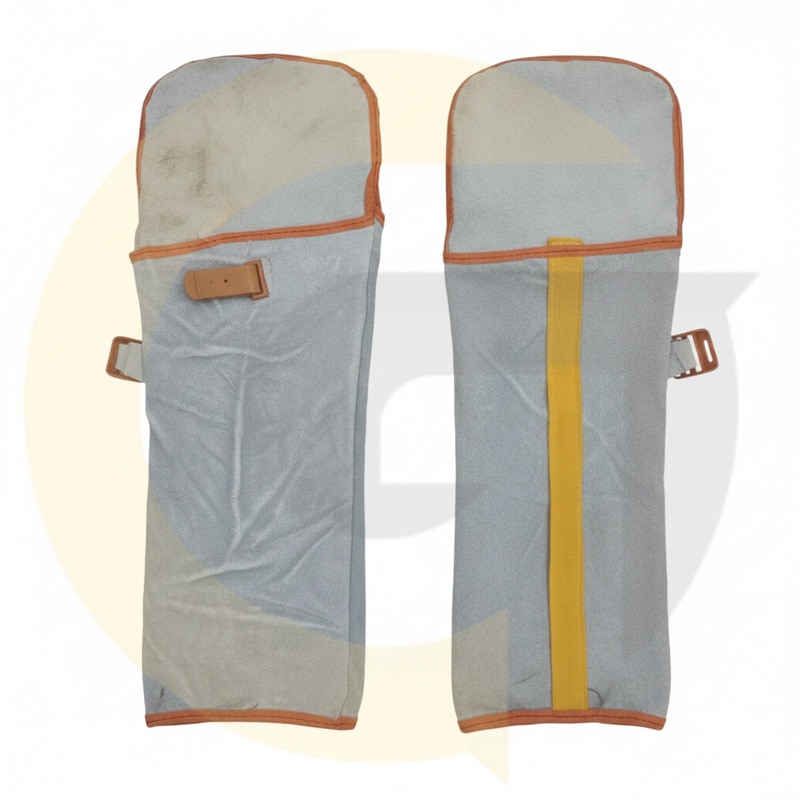 | Safety Leather Welding Hand Sleeves – Heat & Spark Resistant Arm Protection Protect your hands and arms during welding with these durable leather welding hand sleeves. View product → |
Frequently asked questions
How do you choose a leather hand sleeve for welding?
Match the sleeve to the hazard, posture, and task. Separate sparks and spatter, radiant heat, contact heat, sharp edges, grinding debris, electric shock, arc-flash energy, and fumes before selecting coverage.
How should you measure for a leather welding sleeve?
Measure the arm from the glove opening or wrist to the point requiring protection, then check that the sleeve overlaps the glove and jacket without exposing skin during normal movement.
What should you inspect before buying a leather hand sleeve?
Check the leather, seams, stitching, closures, cuffs, markings, size, and stated protection limits. Do not treat leather thickness alone as proof of suitability.
What PPE does a leather hand sleeve not replace?
A sleeve does not replace welding gloves, eye and face protection, protective clothing, safety footwear, hearing protection, respiratory protection, or controls for electric shock and arc-flash energy.