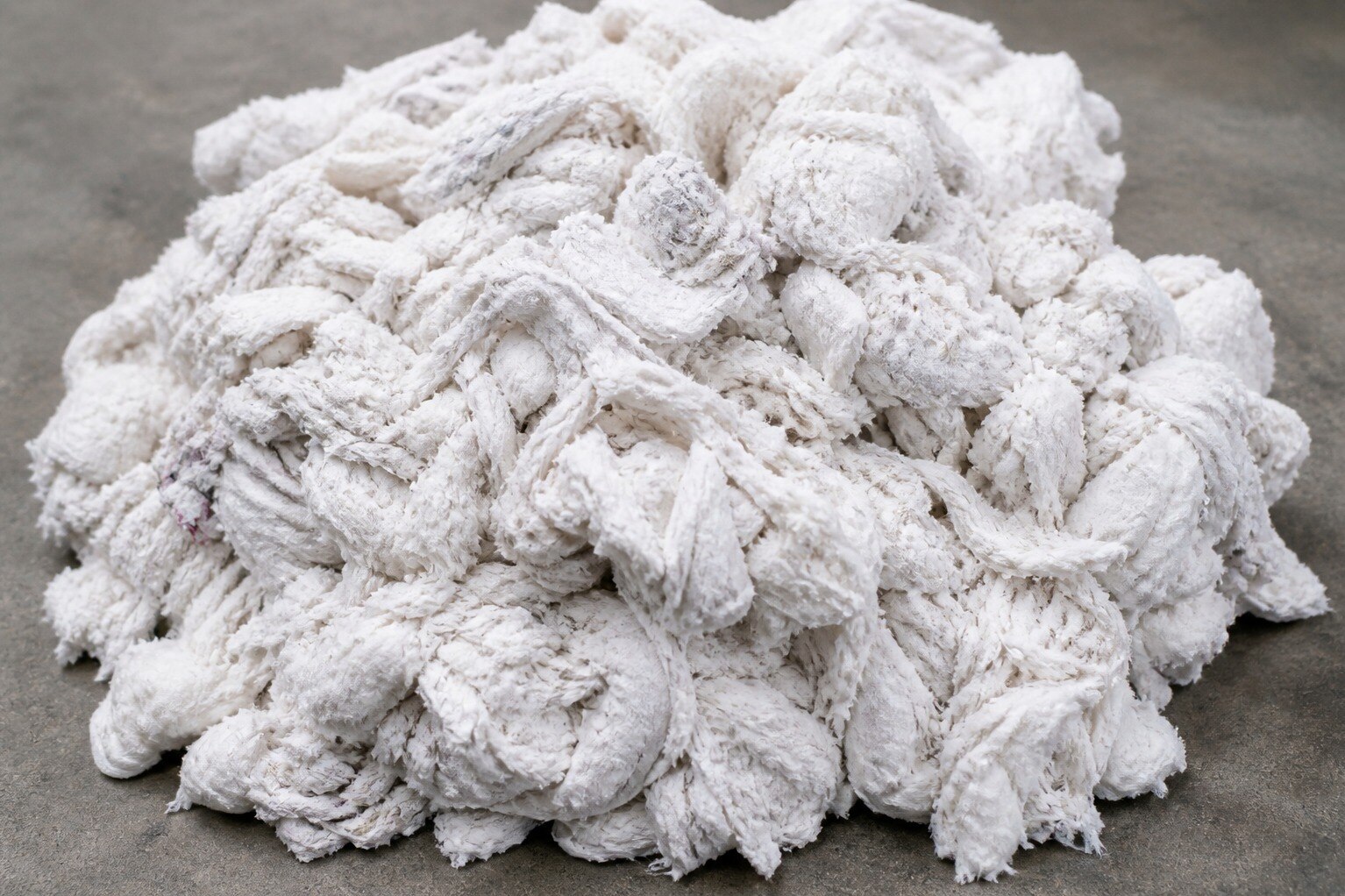
A low quoted price does not tell you whether a cotton-waste load will absorb coolant, leave lint on a bearing, transfer dye to a painted panel, or introduce metal trim into electrical work. By comparing material grade, contamination controls, performance, packaging, documentation, and replacement terms, you can approve a dealer against measurable requirements rather than a vague “cotton waste” description.
Key takeaways
- Match waste grade to oil wiping, polishing, drying, or general cleaning.
- Reject bales containing metal fragments, plastic, coloured fibres, or excessive lint.
- Test absorbency, lint, dimensions, and reuse on your actual cleaning tasks.
- Specify fibre content, packaging, batch checks, and storage conditions before ordering.
Match the Waste Grade to the Cleaning Job
A cotton waste grade that absorbs oil quickly may still leave lint, snag on a fitting, or hide metal dust. Match fibre construction and cleanliness to the job rather than buying one mixed bale for every task.
| Grade | Suitable task | Limitation |
|---|---|---|
| Virgin mill waste | Clean general maintenance, light oil, grease, and coolant wiping | Confirm fibre type and remove hard scraps before use |
| Reclaimed garment cuttings | Heavy oil and grease where low cost matters | Seams, elastic, dyes, and foreign objects can transfer contamination |
| Knitted T-shirt material | Solvent wiping, curved parts, and coolant cleanup | Check chemical compatibility; loose knits can lint |
| Terry or looped cotton | Large spills and high-volume oil or coolant pickup | Loops can snag and shed |
| Tightly woven white cotton | Paint preparation, dust removal, and finishing surfaces | Holds less liquid than terry |
| Lint-controlled wipes | Energised or sensitive electrical equipment and final surface cleaning | Maximum absorbency is not the priority |
| Mixed textile waste | Rough, non-critical maintenance only | Synthetic fibres can soften or melt, and composition is uncertain |
For solvent or paint work, specify a wipe that the selected chemical will not degrade, and keep contaminated material away from welding, grinding, and other hot-work areas. Oil- or solvent-soaked cotton can burn; unknown oily waste belongs in closed, fire-safe handling rather than an open hamper.
A quotation should name the cotton waste grade, including whether it is virgin mill waste, reclaimed garment cuttings, or knitted T-shirt material.
Check Fibre Content, Colour, and Foreign Objects
A “100% cotton” label does not guarantee safe wiping material. It describes fibre content, not whether the waste contains seams, metal trim, dye, oil, or abrasive debris. Ask the dealer to identify the source and construction: virgin mill waste, reclaimed garment cuttings, knitted T-shirt material, flannel, terry, or mixed textile waste.
- Reject an incomplete description such as “white cotton rags30?” until the dealer confirms the actual fibre content, colour, construction, and lot. Polyester and other synthetic fibres can soften or melt near heat, while mixed fibres can leave hazardous debris around hot-work areas. Cotton wipes contaminated with oil, solvent, or metal dust can also burn.
- Choose white or light-coloured wipes when you need to see oil, carbon, metal dust, coolant, or process residue. Dark or mixed-colour material can hide contamination, and unstable dye can transfer onto painted, sealed, or light-coloured surfaces.
- Require a declaration covering zippers, buttons, rivets, hooks, elastic, labels, and hard trim. These pieces can scratch precision surfaces, catch in rotating machinery, or become conductive debris inside electrical equipment.
- Include visual sorting at receiving; use magnet screening when ferrous fragments would create a risk. Check for glass, wire, plastic, stones, and hardened paint as well.
- Keep unknown oily waste out of ordinary open hampers. Drying oils and some oxidising chemicals can self-heat, so the dealer must identify prohibited contaminants and provide handling compatible with segregated, ventilated, or fire-safe storage.
A lot-level replacement promise should cover foreign objects, mildew, excess moisture, dye transfer, and unacceptable lint—not merely claim that the material is “sorted” or “clean.”
Test Absorbency, Lint, Size, and Reuse Before Buying in Bulk
Approve a sample only after it survives the same handling your cleaning process demands. Test several pieces from different parts of the pack, because one excellent rag cannot represent a compressed bale or a mixed sack.
1. Weigh a fixed dry quantity, record the dry net weight, and measure how much water or your intended cleaner each piece absorbs within a set time. Record drip, saturation time, and tearing; repeat the test across at least three sample portions.
2. Wipe a clean dark panel, glass surface, bearing housing, or electrical enclosure, then inspect it under bright light. Count visible fibres and particles. “100% cotton” does not mean lint-free. If you need a lint-free wiping cloth, ask for the lint-shedding or particle-shedding test method and its result.
3. Measure rag size across multiple pieces and record the smallest, largest, and most common dimensions. A wide spread changes folding, grip, coverage, and consumption, while undersized pieces increase handling time.
4. Run the cloth through your planned reuse cycle: saturate it, wring or launder it as your process requires, dry it, and repeat. Reject samples that shed more lint, retain odour, fray, lose absorbency, or transfer colour after reuse.
Keep the approved sample and set written rejection limits for excessive moisture, mildew, foreign objects, dye transfer, and lint. Require the dealer to replace any lot that fails those limits, not merely describe it as “sorted” or “clean.”
Compare Preparation, Packaging, Storage, and Waste Controls
Choose the preparation and delivery format by the labour it creates after arrival, not by the bale price alone. A cheaper load becomes expensive when operators must sort debris, open dense packs, or manage unidentified contamination.
| Option | Labour and risk effect | Suitable control |
|---|---|---|
| Unwashed cotton waste | More incoming soil and process residue; higher sorting effort | Use for dirty maintenance only when clean packaging is not critical |
| Washed cotton waste | Less loose soil, but washing does not prove chemical compatibility or sterility | Request a dry, sealed pack and verify the cleaning chemical |
| Sterilised wipes | Adds controlled hygiene for sensitive or clean areas; unnecessary cost for routine floor work | Confirm the sterilisation claim, pack integrity, and expiry information |
| Loose or small packs | Faster access and easier task-based issue; more packaging and storage space | Match pack size to one shift or one work area |
| Compressed bales | Lower storage volume, but opening and separating material takes time and can release lint | Require secure wrapping and a defined bale-opening method |
For electrical work, specify dry, clean packaging, controlled lint, and no metallic trim, buttons, zippers, or hard fragments. Cotton alone does not make a wipe electrically safe or compatible with a solvent.
Set delivery frequency against consumption and storage capacity. Overstocked oily material increases fire exposure, while late deliveries encourage unsafe reuse.
- Keep oily or solvent-laden wipes in fire-resistant, covered containers until removal.
- Confirm who supplies containers, checks for free liquid, collects them, and provides manifests or waste profiles.
- Require prohibited-chemical rules and segregated, ventilated, or fire-safe handling for drying oils and oxidizers.
Do not use cotton waste for hot work merely because it is cotton; contaminated wipes can burn, and synthetic fibres can melt.
Put Dealer Claims Into a Measurable Purchase Specification
Approve the dealer only after the quote becomes a product specification, not a promise that the waste is “sorted” or “clean.” Attach an approved sample, define the inspection method, and make the lot identification traceable to the delivered pack.
1. Require a signed product specification stating grade, washed or unwashed condition, fibre-composition statement, colour, pack weight, expected piece size, and prohibited inclusions. Name zippers, buttons, rivets, hooks, elastic, labels, hard trim, synthetic fibres, mildew, and free liquid.
2. Require batch identification on every bale, carton, or bag, plus the supplier’s lot identification, packing date, source or processing line, and quantity. Keep one sealed reference sample from each approved lot.
3. Set receiving limits before ordering: zero visible mildew, zero offensive odour, zero free liquid, zero dye transfer in your wipe test, and zero hard objects or conductive trim. Set an agreed lint limit using the same test method and result for every lot.
4. Make approval conditional on a sample pass for absorbency, lint, size, and contamination. Reject a lot that exceeds any limit, differs materially from the approved sample, or contains unknown oil, solvent, oxidizer, or metal-dust contamination.
5. Put replacement terms in writing: the dealer collects rejected material, replaces the affected lot at no charge, pays agreed return freight, and responds within a fixed number of working days. State whether reusable-wiper service supplies containers, checks free liquid, accepts solvents, handles rejects, and provides manifests or waste profiles.
For a quote from Goyals Industrial Hub, request these fields on the quotation and delivery documents rather than accepting “cotton waste” as the complete description. Store oily or solvent-laden wipes in covered, fire-resistant containers and confirm pickup responsibility before use.
Frequently asked questions
How do you match cotton waste grade to an industrial cleaning job?
Use absorbent, low-lint waste for oil and solvent wiping; reserve tougher grades for rough surfaces and general workshop cleaning.
What should you check for in cotton waste before buying?
Check fibre content, colour consistency, foreign objects, metal fragments, plastic, stitching, and visible contamination.
Which tests should you run before placing a bulk order?
Test oil and water absorbency, lint transfer, piece size, snagging, drying time, and whether each piece survives reuse.
What should a cotton waste purchase specification include?
State the fibre grade, colour, acceptable contamination limit, piece-size range, packaging weight, batch identification, storage requirements, and waste-disposal controls.