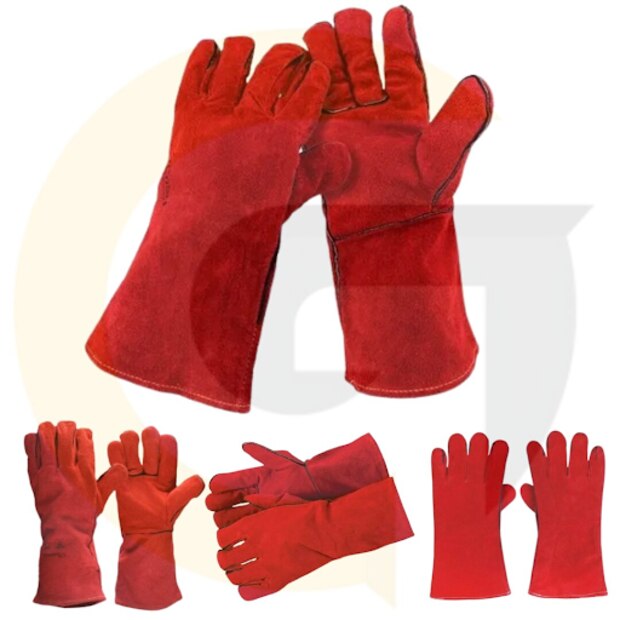
A low price and the words “heat resistant” do not tell you whether gloves will protect welders, preserve finger control or survive repeated handling shifts. Use task-specific specifications, fit trials, traceable test documents and supplier checks to compare dealers before you place a business order.
Key takeaways
- Choose welding, lifting or handling gloves by the task and exposure.
- Compare stitching, cuff length, lining, fit and grip against likely failure points.
- Demand test reports and run a controlled sample trial before ordering.
- Confirm sizes, replacement terms, lead times and delivery conditions in writing.
Match the glove to the job, not to the word “leather”
Choose task-specific gloves: welding gloves for heat and spatter, lifting gloves for load control, and material handling gloves for grip, dexterity and abrasion resistance. A dealer that offers one thick leather glove for every task is selling a material, not a safety solution.
| Glove type | Priority | Suitable work |
|---|---|---|
| MIG welding | Cuff coverage, seam durability and heat protection | Continuous welds, spatter and radiant heat |
| TIG welding gloves | Finger control, soft grain and dexterity | Precise torch and filler manipulation |
| Stick welding | Heat, spark and molten-spatter protection | Higher-exposure arc welding |
| Gas cutting | Heat and spark protection with extended cuff | Torch cutting and hot-work preparation |
| Grinding | Abrasion resistance and secure fit | Sparks, edges and tool handling |
| Lifting gloves | Grip, wrist coverage and snag control | Slings, hooks and manual load positioning |
| Material handling gloves | Dexterity, abrasion and task-specific cut resistance | Steel, components, cartons and warehouse work |
Ask the dealer to identify EN 12477 Type A or Type B for welding gloves, plus the associated EN 407 and EN 388 results. Type A favours broader welding protection; Type B favours dexterity. Do not confuse either rating with permission to handle hot parts continuously.
For lifting and rigging, select gloves that do not catch on rotating equipment, rollers or exposed machinery. Gloves do not increase sling or hook capacity, so keep glove choice separate from rigging inspection and certification.
- Test samples on dry, oily, wet and dusty parts.
- Specify sizes, replacement stock and repeated handling in the trial.
- Reject claims such as “genuine leather” or “welding grade” without test levels.
Compare leather, construction and fit against the failure you expect
Choose the construction for the failure you expect: heat and spatter in welding, or abrasion, cuts, poor grip and seam wear in handling. Leather name alone cannot predict working life.
| Material | Main advantage | Failure to check |
|---|---|---|
| Cowhide gloves | Tough, economical general welding protection | Stiffness can reduce finger control |
| Goatskin gloves | Soft, flexible feel and good dexterity | Thin areas can wear faster at abrasive contact points |
| Split leather | Useful thickness and heat handling at lower cost | Surface durability can vary between hides |
| Grain leather gloves | Uniform surface and cleaner abrasion performance | A smooth finish can slip on oily or wet parts |
| Synthetic alternatives | Consistent coatings, cut ratings or grip textures | Some materials soften or melt near heat and sparks |
For material handling, inspect the palm and fingers separately from the cuff. Palm reinforcement, a thumb saddle and double-layer fingertips protect the points that usually wear first; they do not prove cut or impact protection.
Test grip on the actual dry, oily, wet or dusty components, because a palm that holds dry steel can slip on contaminated parts.
A gauntlet cuff extends wrist and forearm coverage for welding, gas cutting and hot debris. It does not make a handling glove safer by itself, and a bulky cuff can obstruct controls.
Use glove sizing that leaves no fingertip slack and does not compress the knuckles. Oversized gloves catch on moving parts and reduce grip; tight gloves split seams and fatigue your hands. Compare the lined and unlined fit, then repeat the trial after the glove has softened.
Turn “heat resistant” into a task-based performance requirement
A dealer’s “heat resistant” claim means little until you define the hazard, temperature and exposure time. Put the applicable standard and performance level on the quotation; “genuine leather” and “welding grade” do not prove protection.
| Hazard | Evidence to request | What it tells you |
|---|---|---|
| contact heat | EN 407 level, hot-surface temperature and exposure duration | Resistance to a specified surface for a specified time, not continuous handling at that temperature |
| radiant heat | EN 407 radiant-heat level and test evidence | Suitability near an arc, furnace or heated workpiece |
| molten spatter | EN 407 small- or large-molten-metal-splash result | Whether the glove suits the volume and exposure expected |
| flame or convection | EN 407 limited-flame-spread or convective-heat result | Protection against flame contact or hot-air transfer |
An X in an EN 407 position means the property was not tested or does not apply; it does not mean zero protection. Reject any seller that turns a contact-heat rating into an unrestricted maximum operating temperature.
For welding, require the EN 12477 designation. Type A gives higher general welding protection with less dexterity; Type B gives greater dexterity for precise torch or filler manipulation. Check the associated EN 407 and EN 388 ratings rather than accepting “welder” as a specification.
For handling tasks, compare the complete EN 388 ratings with the actual abrasion, cut and puncture threats. Also check ANSI/ISEA 105 cut results: its ASTM F2992-15 TDM scale runs from A1 at 200–499 g to A9 at 6,000 g or more.
Do not treat an ANSI/ISEA 105 rating and an EN 388 cut result as interchangeable.
Qualify the dealer with documents, samples and a controlled trial
A dependable dealer proves a glove’s identity, performance and repeatability—not merely that it sells “welding” gloves. Ask for documents covering the exact model, leather, cuff length, lining and construction; a generic certificate for a manufacturer or product family does not validate the quoted glove.
1. Request a model-specific declaration of conformity and test report, with revision dates. For welding gloves, check the stated EN 12477 Type A or Type B classification and the associated EN 407 and EN 388 results.
2. Match the product label to the paperwork. It should identify the model, size range, manufacturer, protection markings and batch number. Require lot traceability linking delivered cartons to the test evidence and production records.
3. Use the dealer’s sample policy to obtain a usable size run, not one sample pair. Have the actual workforce test dexterity, cuff coverage and control of tools; record exchanges by model and size. A loose glove increases snagging risk, while a tight glove accelerates seam stress and fatigue.
4. Run a controlled field trial across a defined number of shifts and the real tasks. Record seam failure, palm wear, grip loss, heat damage, shrinkage after cleaning, and replacement consumption—not just comfort.
5. Compare cost per wearing hour after the trial. A cheaper pair that fails early costs more in replacements and downtime. Ask Goyals Industrial Hub for these records before approving a repeat order, along with a GST invoice that identifies the supplied model and batch.
Related products
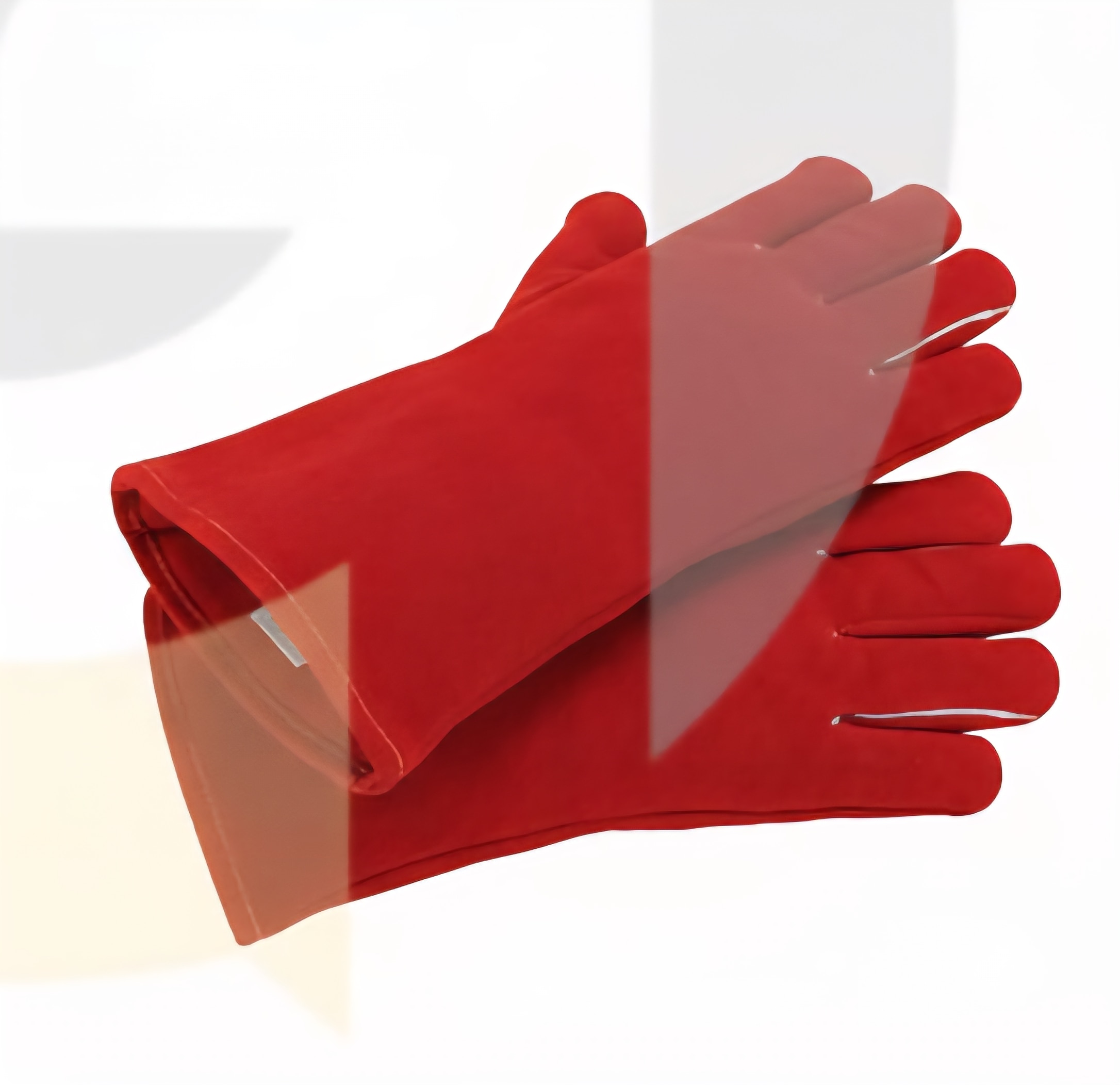 | Welding Equipments Red Leather Welding Gloves – Heat Resistant & Durable Protect your hands with these premium red leather welding gloves, designed for maximum heat resistance, durability, and comfort. View product → |
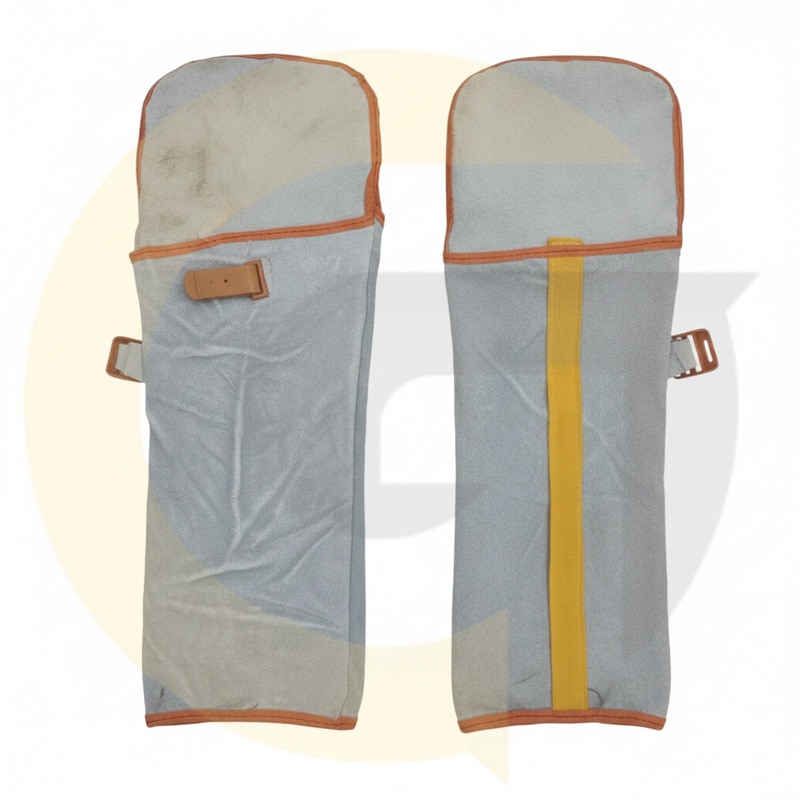 | Safety Leather Welding Hand Sleeves – Heat & Spark Resistant Arm Protection Protect your hands and arms during welding with these durable leather welding hand sleeves. View product → |
Check the commercial terms before approving the order
Confirm the commercial terms before approving the order: stock consistency, sizes, replacements, minimum order quantity, delivery timing and returns. A low unit price is irrelevant if one size disappears, damaged gloves cannot be replaced, or replenishment arrives after a shift starts.
| Commercial term | Confirm in writing | Why it matters |
|---|---|---|
| Stock consistency | Models, sizes and expected replenishment levels | Prevents mixed gloves or production stoppages |
| Minimum order quantity | Quantity per model, size and colour | Reveals excess stock and tied-up cash |
| Replacement availability | Individual pairs, standard sizes and replacement lead time | Supports rapid replacement after seam or palm failure |
| Lead time | Dispatch time and delivery date for the first and repeat orders | Separates quoted availability from usable supply |
| Delivery coverage | Service to each site, freight charges and delivery restrictions | Prevents surprises for remote or multi-site operations |
| Return terms | Time limit, unused-condition rule and treatment of defective batches | Defines your remedy for wrong sizes or failed lots |
| Response time | Contact method and promised reply time for shortages or defects | Shows whether an urgent issue will receive action |
| Sample policy and GST invoice | Sample charges, adjustment against orders and invoice details | Makes trials auditable and purchasing compliant |
Calculate cost per wearing hour from purchase price, usable shifts and replacement consumption, not price alone. Record premature seam failure, palm wear and replacement use during the trial, then make the dealer’s lot-acceptance and replacement process part of the purchase order.
Frequently asked questions
How do you match leather gloves to welding and material-handling tasks?
Use welding gloves for heat, sparks and spatter; lifting gloves for load control; and material-handling gloves for grip, dexterity and abrasion resistance.
Which glove features should you compare before choosing a dealer?
Compare leather type, thickness, stitching, lining, cuff length, sizing, flexibility and grip against the failure you expect on the job.
How should you evaluate a glove labelled heat resistant?
Ask for the test method, temperature range, exposure time and protection limits, then compare them with the actual welding task, contact time and spatter risk.
What should you request from an industrial glove dealer?
Request product specifications, test reports, batch or lot identification, size samples and a controlled trial before approving the order.
Which commercial terms should you check before ordering gloves?
Confirm sizes, minimum order quantities, lead time, delivery schedule, replacement terms, inspection conditions and the documents supplied with each shipment.
Related products
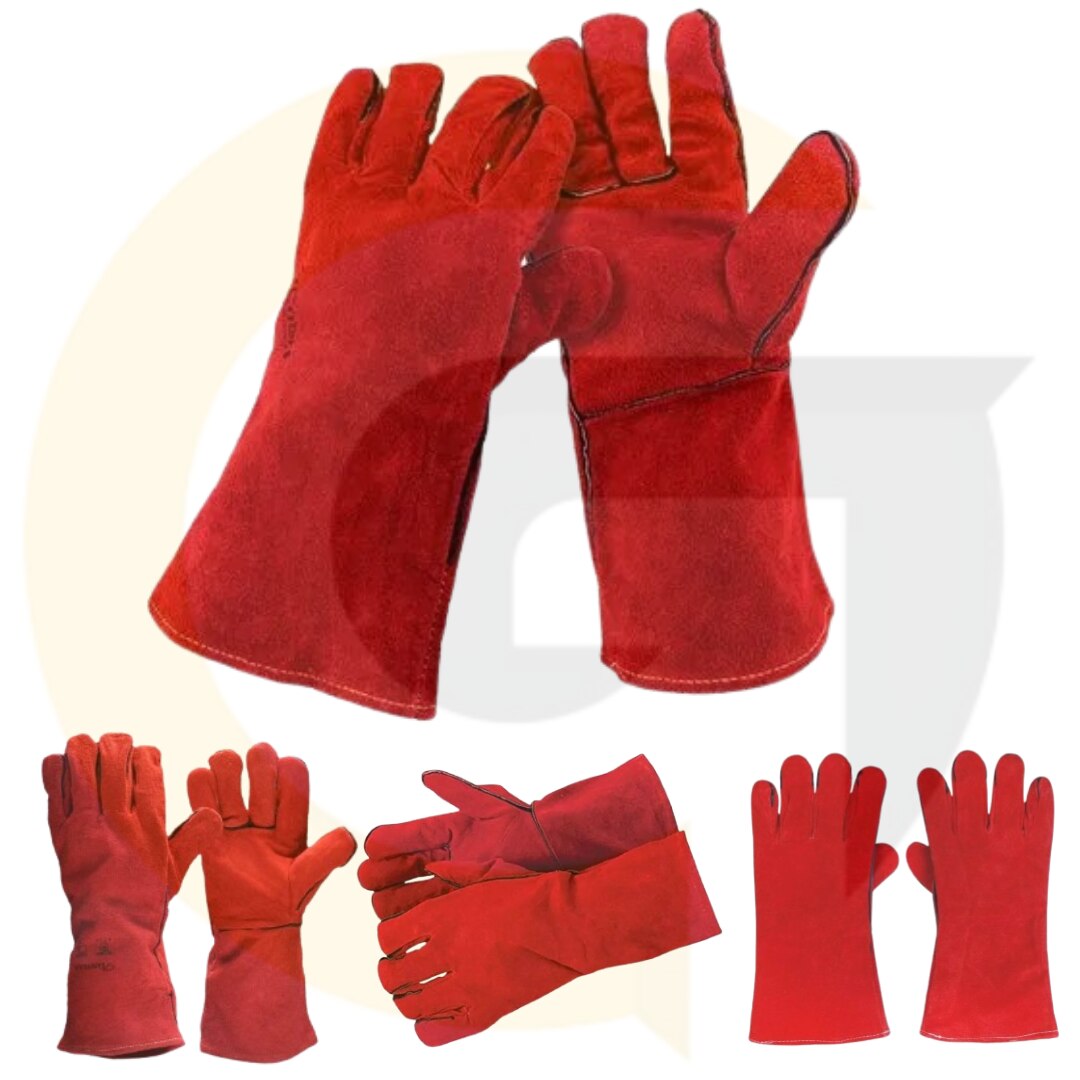 | gloves Red Leather Safety Gloves ₹85 · Industrial Hand Protection ₹85 Goyal Industrial Hub, Delhi brings you premium-quality Red Leather Safety Gloves at just ₹85, designed for industrial safety, welding, construction,... View product → |
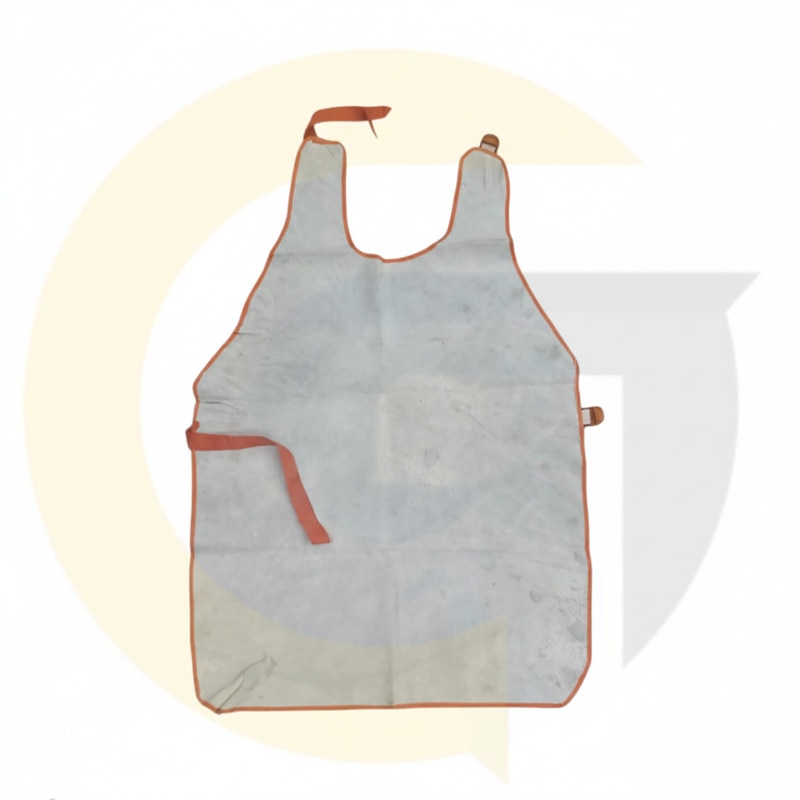 | Safety Heavy-Duty Leather Welding Apron – Heat & Spark Resistant Protective Gear Stay protected while you work with this heavy-duty leather welding apron, designed to shield you from sparks, spatter, and heat. View product → |
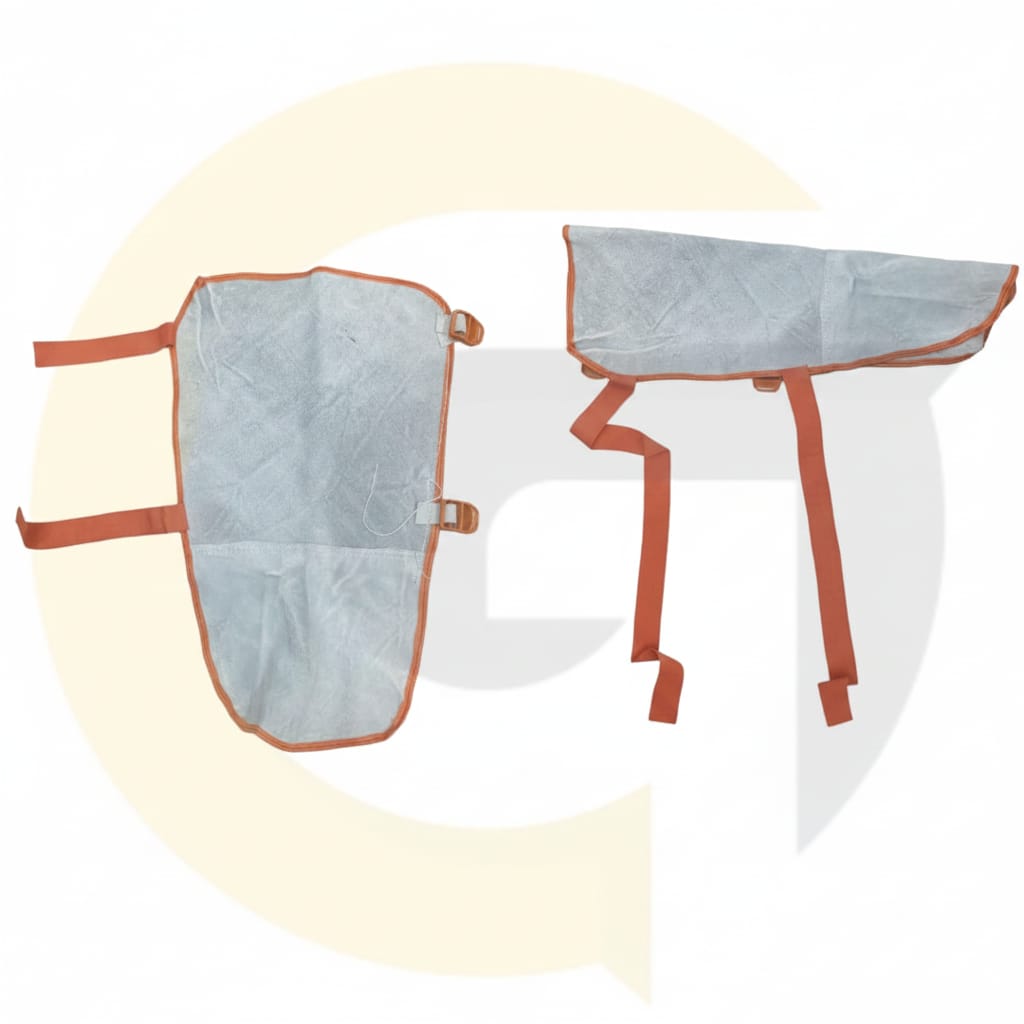 | Safety Leather Welding Leg Guards – Heat & Spark Resistant Protection Ensure maximum lower-body safety with these heavy-duty leather welding leg guards. View product → |