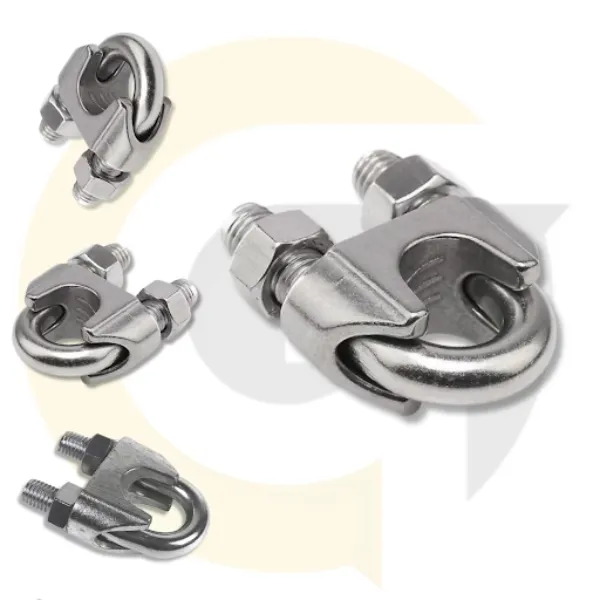
Simple fastening components often have an important role in industrial installations. U clamps are widely used where pipes, conduits, cables, tubes, poles, or similar cylindrical components need to be positioned and supported securely.
Understanding how these components are used helps procurement teams communicate more clearly with a U Clamp dealer and choose specifications appropriate for the installation.
Across Delhi's manufacturing, construction, fabrication, maintenance, and engineering sectors, U clamps may be required for both routine maintenance and new project work.
Understanding the Basic U Clamp Design
A U clamp typically has a curved profile that surrounds a pipe, tube, conduit, or similar component. Depending on the design, threaded ends and fastening hardware allow the clamp to be secured to a support structure.
Although the concept is straightforward, dimensions can vary significantly.
Important specifications can include:
- Internal width
- Leg length
- Rod diameter
- Thread dimensions
- Material
- Surface treatment
- Matching nuts and washers
- Intended installation environment
These details determine whether the component fits correctly.
Pipe Support Is a Common Application
Industrial facilities frequently contain piping for utilities, water, compressed air, drainage, process lines, and other services.
U clamps can be used as part of support arrangements that keep suitable pipes positioned relative to structural members or mounting surfaces.
The required clamp should correspond with the pipe dimensions and installation design. An incorrectly sized component may be difficult to install and may fail to provide the intended support.
Electrical Installation Applications
U-shaped clamps can also appear in electrical and cable-management work where conduits or suitable cable-support arrangements need secure positioning.
Industrial facilities often contain long service routes passing across walls, frames, machinery zones, and utility areas. Consistent fastening helps maintain a more organised installation.
Selection should still reflect the actual load, dimensions, environment, and engineering requirements.
Fabrication Projects Need Dimensional Accuracy
Fabrication workshops regularly work with pipes, structural members, frames, supports, and customised assemblies.
In these situations, a small dimensional mismatch can delay assembly.
Before placing an order, fabrication teams should verify drawings, measurements, hole positions, thread requirements, and mating hardware. Where repeat quantities are required, confirming specifications before bulk procurement can reduce avoidable rework.
Surface Finish Should Match the Environment
Fasteners and clamps may be exposed to moisture, dust, chemicals, outdoor conditions, or ordinary indoor industrial environments.
Material and surface finish should therefore be considered in relation to expected exposure.
For example, zinc-coated or galvanised components may be considered in applications where additional corrosion resistance is desirable, while specialised environments may require different materials.
The correct choice depends on project conditions.
Information Buyers Should Provide
A clear purchase enquiry should identify the dimensions and intended application instead of simply asking for 'U clamps.'
Procurement managers can specify the pipe or component size, clamp diameter, leg length, thread requirement, material, finish, quantity, and installation environment.
This gives the supplier more useful information for identifying suitable products.
Goyals Industrial Hub supplies industrial equipment and engineering products for businesses in Delhi. Buyers approaching a U Clamp dealer can make procurement more efficient by preparing dimensional and application details before requesting a quotation.
The U clamp may be a relatively small component, but correct sizing can influence installation quality, maintenance efficiency, and project progress. Treating it as an engineered fastening component rather than a generic accessory helps industrial teams purchase more accurately.
Keywords