
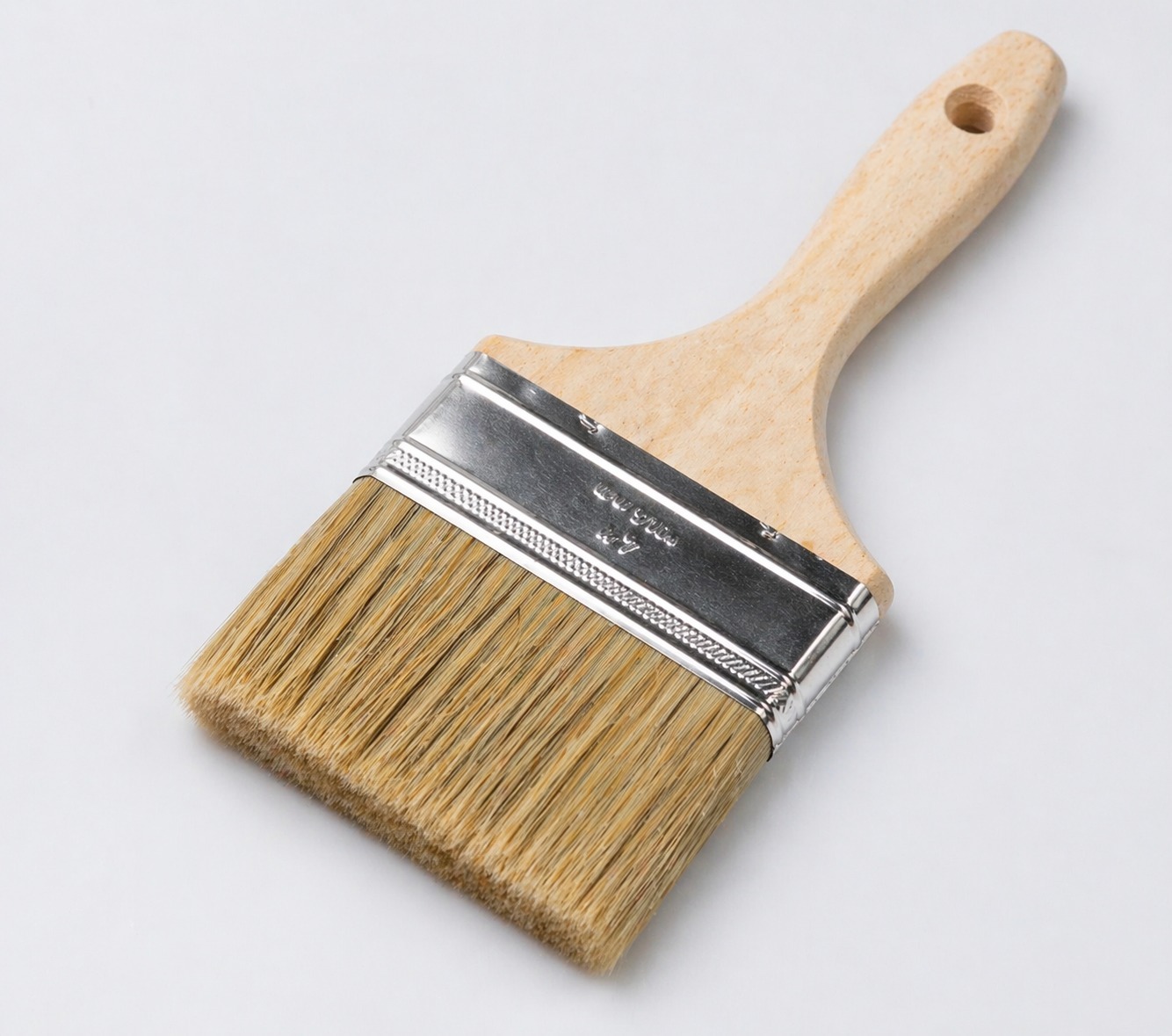
Industrial painting involves much more than selecting a colour. Surface condition, coating type, accessibility, finish expectations, brush construction, and working environment can all influence the quality and efficiency of application.
For maintenance departments, fabrication workshops, contractors, engineering companies, and construction teams, selecting products from a Paint Brush dealer should therefore be based on the coating task rather than simply buying brushes by width.
Businesses across Delhi regularly use brushes for maintenance painting, touch-ups, equipment coating, fabrication work, and difficult-to-reach surfaces.
Match the Brush to the Coating
Different coatings can behave differently during application.
Brush filament or bristle material should be compatible with the paint, primer, coating, solvent system, and manufacturer's application recommendations.
Using an unsuitable brush can contribute to poor loading, uneven application, bristle loss, or an unsatisfactory finish.
Checking the coating manufacturer's instructions is a useful starting point.
Width Depends on the Surface
Large, accessible surfaces can often be covered more efficiently with wider brushes, while smaller brushes provide better control around edges, joints, bolts, corners, frames, and detailed fabrication.
A maintenance team may therefore require several brush sizes rather than one standard product.
Selecting widths according to common tasks can improve productivity and reduce unnecessary paint handling.
Brush Quality Affects Finish
Low-quality brushes may lose bristles, spread unevenly, or deteriorate quickly during demanding work.
For industrial maintenance, buyers should consider bristle retention, handle construction, ferrule quality, shape, and overall durability.
The lowest unit price can become less attractive if brushes require frequent replacement or create additional finishing work.
Surface Preparation Remains Essential
Even a good brush cannot compensate for inadequate surface preparation.
Depending on the coating system and substrate, preparation may involve cleaning, degreasing, removing loose material, treating corrosion, abrading the surface, or applying a suitable primer.
Industrial users should follow the coating manufacturer's preparation requirements.
This helps the applied coating perform as intended.
Keep Brushes Appropriate for Different Materials
Where several coating systems are used, separating brushes by application can help avoid contamination.
Maintenance teams can establish simple storage practices so that tools used with one product are not inadvertently introduced into another coating system.
Correct cleaning methods should also follow the requirements of the coating and brush materials involved.
Bulk Procurement Needs Practical Planning
Contractors and fabrication units may consume brushes regularly.
Instead of purchasing random sizes each time, procurement teams can review past usage and establish a practical mix of common sizes and brush types.
This improves stock availability without unnecessarily holding large quantities of rarely used products.
Goyals Industrial Hub serves industrial customers seeking engineering, safety, and workplace supplies in Delhi. When evaluating a Paint Brush dealer, buyers can discuss coating type, surface, brush size, expected finish, quantity, and frequency of use.
Good industrial painting depends on the complete process. Appropriate brush selection, correct surface preparation, compatible coatings, and disciplined application practices work together to produce more consistent maintenance and finishing results.
Keywords