Nut and bolt procurement can affect far more than the cost of a fastening order. Incorrect dimensions, incompatible threads, unsuitable grades, inconsistent finishes, and missing matching hardware can slow installation and create avoidable rework.
Businesses looking for a GI Nut Bolt dealer should therefore evaluate both the fastener specification and the supplier's ability to support accurate purchasing.
This is especially relevant to fabrication units, construction companies, maintenance departments, contractors, and engineering industries operating in Delhi.
Confirm What GI Means for the Requirement
Buyers commonly use GI terminology when referring to galvanised fasteners, but the exact coating or finish requirement should be confirmed rather than assumed.
Different galvanising and zinc-coating processes can produce different coating characteristics.
If a project drawing, engineering specification, or client standard identifies a particular coating requirement, that specification should guide procurement.
Match Nut and Bolt Threads
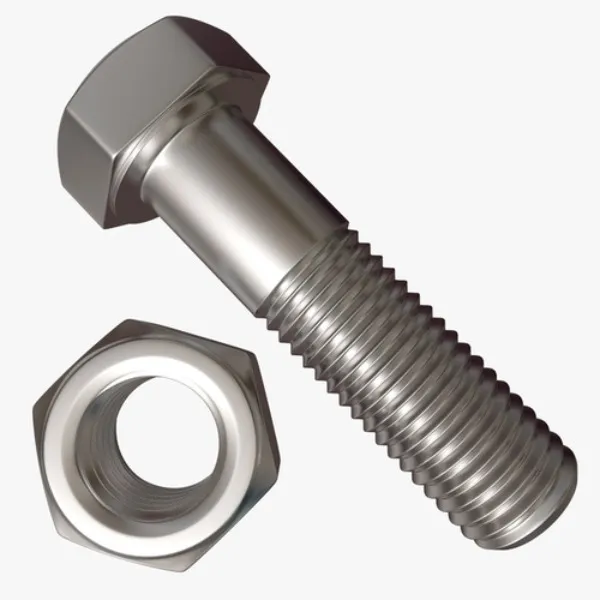
A bolt and nut must have compatible thread specifications.
Procurement teams should verify diameter, pitch, thread standard, and fit before ordering.
This is particularly important where imported machinery, older equipment, or mixed standards are present.
Forcing incompatible components together can damage threads and compromise the connection.
Check Bolt Length Correctly
Overall length is only one consideration.
The application may also depend on threaded length, grip length, washer arrangement, and the thickness of materials being joined.
Buyers should examine the complete joint rather than estimating bolt length from memory.
For repeat assemblies, maintaining a bill of materials can simplify future purchasing.
Grade Is a Critical Specification
Not all nuts and bolts of the same dimensions have the same mechanical properties.
Fastener grade or property class may be important where connections carry structural or mechanical loads.
Industrial buyers should follow engineering drawings, equipment documentation, and applicable standards rather than substituting grades based solely on availability.
Evaluate Coating Condition
Galvanised fasteners are often selected where corrosion resistance is required, but handling and storage still matter.
Products should be stored appropriately and inspected for damage, contamination, or significant deterioration before installation.
The installation environment also needs consideration because no coating is universally suitable for every corrosive condition.
Plan Quantities Around Project Needs
Running short of a specific bolt size during fabrication or site installation can stop work for want of a low-cost component.
Procurement teams can reduce this risk by preparing fastener schedules covering dimensions, grades, finishes, quantities, nuts, and washers.
For recurring maintenance requirements, minimum stock levels can also help.
Assess the Supplier Through Specification Accuracy
Goyals Industrial Hub supplies industrial and engineering products to customers in Delhi. When choosing a GI Nut Bolt dealer, buyers should consider whether the supplier can work with clearly defined dimensions, thread specifications, grades, finishes, quantities, and matching hardware requirements.
Fasteners may represent a small percentage of total project expenditure, yet they are essential to assembly. Accurate specifications, suitable material selection, consistent supply, and disciplined stock planning help industrial businesses prevent delays caused by seemingly minor components.
Keywords