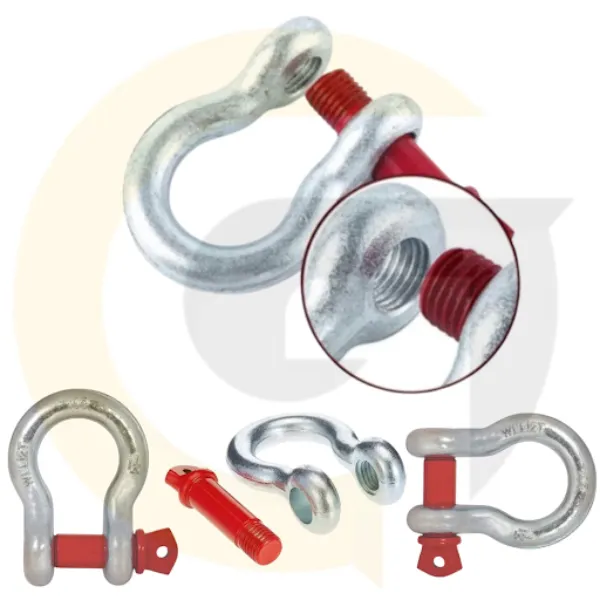
Bow shackles are familiar components in many rigging environments, yet familiarity can sometimes lead to casual purchasing decisions. A shackle used within lifting operations needs to be selected according to the load, connection geometry, product rating, and intended application.
For construction firms, fabrication units, engineering companies, maintenance teams, and contractors in Delhi, evaluating a Bow Shackle dealer should therefore focus on technical suitability rather than price alone.
Understand Why the Bow Shape Matters
A bow shackle has a rounded body that provides more internal space than a narrow D-shaped shackle.
This geometry can make certain bow shackles suitable for rigging arrangements involving compatible multi-leg connections or situations requiring greater internal clearance, subject to the manufacturer's specifications.
However, the wider profile does not mean every loading direction is automatically acceptable.
Users need to follow product-specific load guidance.
Check Capacity Information
Suitable lifting shackles should provide identifiable capacity information appropriate to their intended use.
Before purchasing, buyers should verify the required working load rating against the lifting plan and check available manufacturer documentation.
Capacity should never be estimated from physical size alone.
Two products that look similar may have different material properties, manufacturing specifications, and rated capacities.
Examine Pin Configuration
Pin design can influence where a shackle is appropriate.
For applications where connections are made and removed frequently, one configuration may be convenient. Longer-term or more demanding rigging arrangements may call for another type.
The correct selection should be based on competent rigging practice and the manufacturer's guidance rather than convenience alone.
Ask About Product Identification
Traceability is valuable when lifting equipment is managed through inspection programmes.
Procurement teams should evaluate whether the required identification and technical information are available for the product being considered.
This supports inspection records and helps maintenance or safety personnel identify the equipment later.
Consider Rigging Compatibility
The shackle must work with the other components in the lifting arrangement.
Check whether the pin, bow dimensions, connected sling eyes, lifting points, hooks, and other hardware create a suitable connection.
Rigging should avoid arrangements that introduce unintended stresses.
Where the application is safety-critical, selection and use should be determined by competent personnel.
Look Beyond Purchase Price
The lowest-priced product is not necessarily the most economical choice for industrial use.
Product identification, appropriate rating, dimensional consistency, documentation, reliability, and suitability for repeat procurement can all matter.
Downtime caused by incompatible hardware can easily outweigh a small difference in purchase price.
Prepare a Better Supplier Enquiry
Before requesting a quotation, provide the supplier with the nominal size, required capacity, pin preference, quantity, intended application, and relevant technical requirements.
Goyals Industrial Hub serves industrial and engineering buyers seeking safety and engineering supplies in Delhi. A conversation with a Bow Shackle dealer becomes much more useful when the buyer has already established the basic rigging specifications.
Shackles are connection components within a larger lifting system. Selecting them carefully, inspecting them properly, and using them within specified limits are essential practices for professional industrial operations.
Keywords