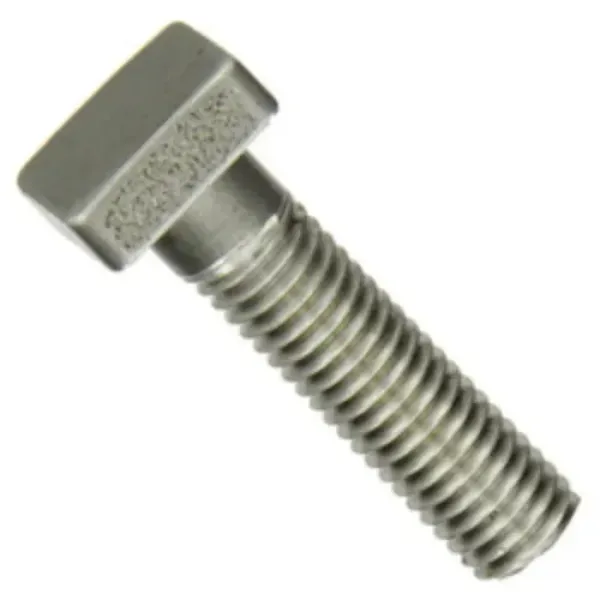
Industrial fastening systems often contain components that receive little attention until something does not fit. T bolts are a good example. Their distinctive head design makes them useful in selected profiles, slots, channels, fixtures, machinery assemblies, and mounting systems.
Understanding the important dimensions before approaching a T Bolt dealer can prevent ordering mistakes and simplify installation.
In Delhi's engineering, fabrication, manufacturing, construction, and maintenance sectors, these fasteners can support a wide range of assembly requirements.
T Bolts Work With Specific Mounting Systems
Unlike conventional hex-head bolts, T bolts are designed with a head that can engage with compatible slots or channels.
This allows the bolt to be positioned within a suitable mounting system while the threaded section accepts a nut or other compatible fastening component.
Applications can include machinery frames, industrial fixtures, mounting rails, fabrication assemblies, workholding systems, and selected structural installations.
The precise use depends on the T bolt design.
Head Dimensions Need Careful Checking
A T bolt can have the correct thread diameter but still be unsuitable if its head does not fit the intended slot.
Buyers should therefore verify head width, head thickness, neck dimensions where relevant, and compatibility with the channel or profile.
Where a manufacturer's mounting system is involved, checking its technical dimensions before purchasing replacement hardware is especially useful.
Thread Specifications Matter
Thread diameter and pitch influence compatibility with nuts and threaded components.
Industrial teams should confirm:
- Thread diameter
- Thread pitch
- Threaded length
- Overall bolt length
- Required nut specification
Mixing incompatible thread standards can lead to damaged threads, weak connections, or installation delays.
Material Selection Depends on Service Conditions
Fasteners can experience tension, vibration, moisture, heat, corrosion, and repeated adjustment depending on the application.
Material grade and finish should therefore be selected according to engineering requirements.
A general-purpose indoor assembly may have different requirements from equipment installed outdoors or in a corrosive industrial environment.
Buyers should avoid assuming that every visually similar T bolt has equivalent mechanical properties.
Repeat Orders Need Consistent Specifications
Maintenance teams frequently need replacement fasteners for existing machinery and fixtures.
Keeping records of dimensions, material grades, thread details, and finishes can make repeat procurement significantly easier.
This is particularly useful for industrial facilities operating several machines with different fastening systems.
A small internal fastener catalogue can reduce measurement errors and emergency purchasing.
Samples Can Help With Unusual Requirements
When a component is difficult to identify, supplying a clear drawing, dimensional sketch, part reference, or physical sample can help clarify the requirement.
This is especially useful for older machinery or customised fabrication systems where documentation may be limited.
Goyals Industrial Hub serves industrial customers looking for engineering supplies in Delhi. Buyers contacting a T Bolt dealer can speed up product identification by sharing exact dimensional information rather than relying on general descriptions.
Reliable fastening begins with compatibility. By checking head dimensions, thread specifications, material, finish, length, and application requirements before ordering, industrial buyers can reduce fitting problems and make maintenance and fabrication work more predictable.
Keywords